
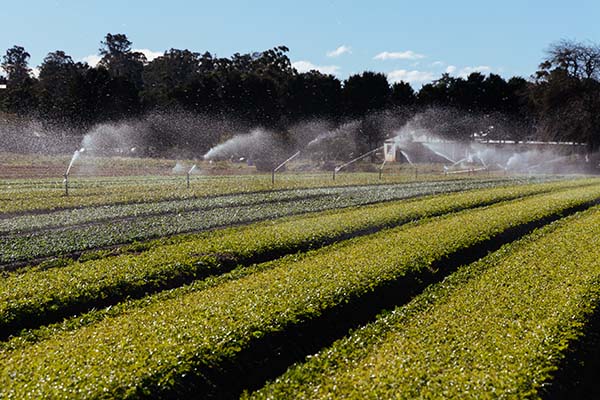
As horticultural and agricultural businesses in New South Wales enter spring, many growers are facing a familiar challenge: how to maximise production while making the most of limited moisture. Seasonal outlooks indicate warmer-than-average temperatures across much of the state. Many regions also likely to experience below-average rainfall. These conditions place greater importance on efficient nutrient management and strategic fertiliser planning.
Whether you're managing a commercial horticulture enterprise, a small farm, grazing pastures, or a productive home garden, the right fertiliser program can help maintain growth, improve plant resilience, and deliver better returns on every fertiliser dollar invested. We've put together five tips to get you going.
Before investing in fertiliser, it's important to understand what nutrients are already available in your soil. Soil testing remains one of the most effective tools for identifying nutrient deficiencies, pH issues, and areas where fertiliser applications can be better targeted.
A comprehensive soil test can often reveal hidden deficiencies in key nutrients such as phosphorus, potassium, calcium, magnesium, and trace elements. Addressing these issues early helps avoid wasted fertiliser applications and ensures crops and pastures receive the nutrition they need to perform.
Your Ace Ohlsson Agronomist can arrange soil testing and more.
In drier seasons, nutrient efficiency becomes just as important as nutrient quantity. Plants under moisture stress are often less able to utilise nutrients effectively, meaning poorly timed applications may not deliver the expected results.
Controlled-release fertilisers can be particularly useful during variable spring conditions. These products release nutrients gradually over time, helping to reduce losses while providing a more consistent nutrient supply to growing plants. Water-soluble fertilisers also play an important role where irrigation systems allow for precision nutrient delivery.
Matching fertiliser timing to growth stages can significantly improve nutrient uptake and reduce unnecessary expenditure. We offer a broad range of fertiliser solutions, backed by expert advice.
While nitrogen, phosphorus and potassium often receive most of the attention, trace elements are equally important for plant health and productivity.
Deficiencies in zinc, iron, manganese, copper and boron can limit growth, reduce crop quality and impact yields, even when major nutrient requirements are being met. In many NSW soils, particularly those intensively cropped or horticulturally managed, trace element deficiencies can emerge over time.
Chelated micronutrient products and foliar nutrition programs can provide fast, effective correction where deficiencies are identified.
We offer a range of plant nutrition products and tools for application.
Warmer spring conditions can place additional stress on crops, turf, ornamentals and pastures. Well-nourished plants are typically better equipped to withstand periods of heat, moisture fluctuations and pest pressure.
Balanced nutrition encourages stronger root development, improved water-use efficiency and greater overall plant vigour. Combining fertiliser programs with soil conditioners, wetting agents and organic matter can further improve soil structure and moisture retention, allowing plants to access both water and nutrients more effectively.
With seasonal conditions remaining uncertain, a proactive approach to fertiliser management is essential. Reviewing soil fertility, selecting appropriate nutrient sources and focusing on efficiency can help growers maintain productivity while controlling input costs.
Whether you're managing a commercial cropping program, a market garden, productive pasture or a backyard vegetable patch, now is the ideal time to review your fertiliser strategy and prepare for the growing season ahead.
Disclaimer - important, please read:
Ace Ohlsson provides recommendations to the best of its knowledge and based on assumptions and information which it understands to be up to date, complete and accurate. If you are aware of any error or inaccuracy with the information on which this recommendation is based, you must immediately bring this to Ace Ohlsson's attention. This recommendation is provided for your use only, and not that of any other third party. In some circumstances, the information Ace Ohlsson provide may be in summary form or derived from information sourced from third parties. You should always carefully evaluate all available information and consult Ace Ohlsson or another advisor further before you commit to any course of action or rely on any recommendation. Additionally, Ace Ohlsson expects that you will use your knowledge, experience and best judgement in relying on any recommendation and determining whether the recommendation is, and continues to be, appropriate. Ace Ohlsson does not accept liability or responsibility for any indirect,consequential or economic loss or damage of any kind arising from your acceptance or reliance on this recommendation. To the fullest extent permitted by law, all guarantees, warranties or implied terms and conditions are expressly excluded and Ace Ohlsson’s liability with respect to any services provided is limited to re-supply of the services, or the cost of having the services re-supplied. Ace Ohlsson may from time to time recommend products or services for which it may receive a financial incentive (rebate, commission, benefit, etc) from a supplier/manufacturer directly related to your purchase or use of that product or service.